The Case for AI-Driven Cost Intelligence in Automotive
The following insights are taken from an interview in which Caresoft Global Chief Revenue Officer Richard Ambadipudi sat down with Automotive Industries to discuss how AI-driven cost intelligence is reshaping automotive engineering. Read the full interview here.
Global OEM revenues from new vehicle sales account for approximately $2.75 trillion annually, and total costs run up roughly $2.6 trillion. Within this cost, materials and purchased parts (metals, plastics, electronics, battery cells, and everything sourced from the supply base) account for between $1.1–1.23 trillion per year. This figure represents the full scope available to optimize technology and cost across the automotive value chain. And now, the tools exist to do it systematically, at the speed and scale the industry’s development timelines demand.
In a wide-ranging conversation with Automotive Industries, Caresoft Global Chief Revenue Officer Richard Ambadipudi explains why this moment in automotive history is different from every previous cycle of cost pressure the industry has faced, and why AI-powered cost intelligence has moved from a capability advantage to an operational necessity.
The leverage is already there
Materials and purchased parts are the largest single cost line in the entire automotive value chain, and they respond directly to engineering decisions. Where labor costs, overhead, and depreciation are largely fixed by facility and workforce agreements, materials are variable. Determined by engineering team specifications, the number of parts chosen, joining strategy used, and whether these choices are made with an accurate picture of what the best available alternative looks like, that is where the leverage sits.
The math that follows is straightforward. Just a 1% improvement in cost efficiency, applied systematically across that spend base, translates to $11–12 billion in annual savings. A 2% improvement, consistent with what structured value engineering programs have historically delivered, represents over $22 billion.
The leverage has always been there. The constraint, as Ambadipudi explains, has always been the same: cost intelligence reaching engineers after the window to use it has already closed.
A timing problem, not a knowledge problem
In conventional automotive program workflows, the sequence runs in exactly the wrong direction. Teardown benchmarks are commissioned after a competitor vehicle launches. Value analysis and value engineering workshops are scheduled after program budgets are fixed. Cost reviews happen after design decisions have been ratified.
The ability to influence vehicle cost drops sharply after concept and design freeze, and approaches zero by the time production tooling is released. A design change at the concept stage costs hours in engineering. The same change after tooling sign-off costs hundreds of thousands of dollars and months of program disruption.
Consequently, an organization’s best intelligence about what is achievable arrives systematically after the window to act on it has closed. Insights get documented, filed, and carried forward as aspirations for the next program, where the same sequence plays out again.
“This is not a failure of effort or expertise,” Ambadipudi says. “The failure is structural. The sequence is wrong.”
What electrification changed
In the combustion era, an OEM could absorb a degree of cost inefficiency because the business model was relatively forgiving. Margins were thin but stable, programs ran long, and there was time to course-correct. That environment no longer exists.
Electrification is consuming capital at a scale the industry has never seen. When 30–40% of total vehicle cost is locked into a battery system not easily optimized through conventional engineering methods, every other system in the vehicle has to carry a higher share of the profitability load. Body structure, closures, interiors, chassis; these systems are now carrying a cost reduction responsibility they were not originally designed to bear.
There is a second dimension that compounds the challenge. The architecture of electric vehicles is genuinely new. Structural battery integration, large-scale casting replacing multi-part assemblies, new thermal management architectures — these are not incremental updates. They represent a new generation of engineering decisions where the competitive benchmark is being established right now, in real time, across programs already in production or development. The OEMs that access those benchmarks earliest and incorporate them at the concept stage will build cost positions that are very difficult for later-movers to match.
Sixty programs. $3.5 billion. This is not theoretical.
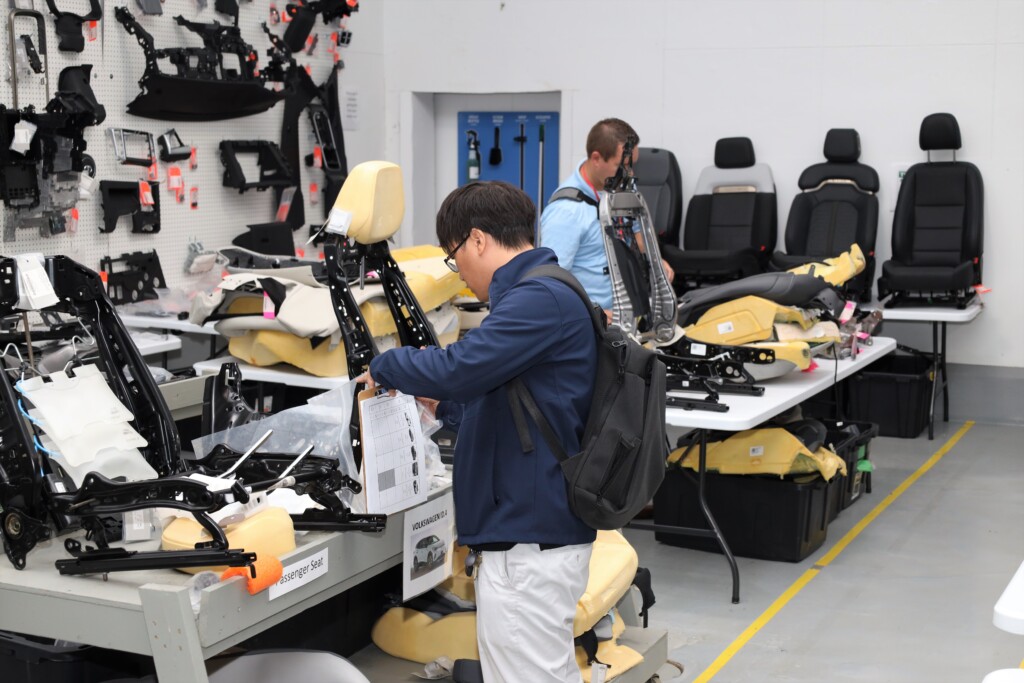
Caresoft Global did not develop the Eureka platform as a software concept. It was built from two decades of practice. We have conducted more than 60 bespoke cost reduction programs for global OEMs, working directly with engineering and procurement teams on live and future vehicle programs — across vehicle segments, powertrain systems, electrical architecture, interiors, and chassis. The cumulative output is over $3.5 billion in identified cost-saving opportunities delivered to our customers.
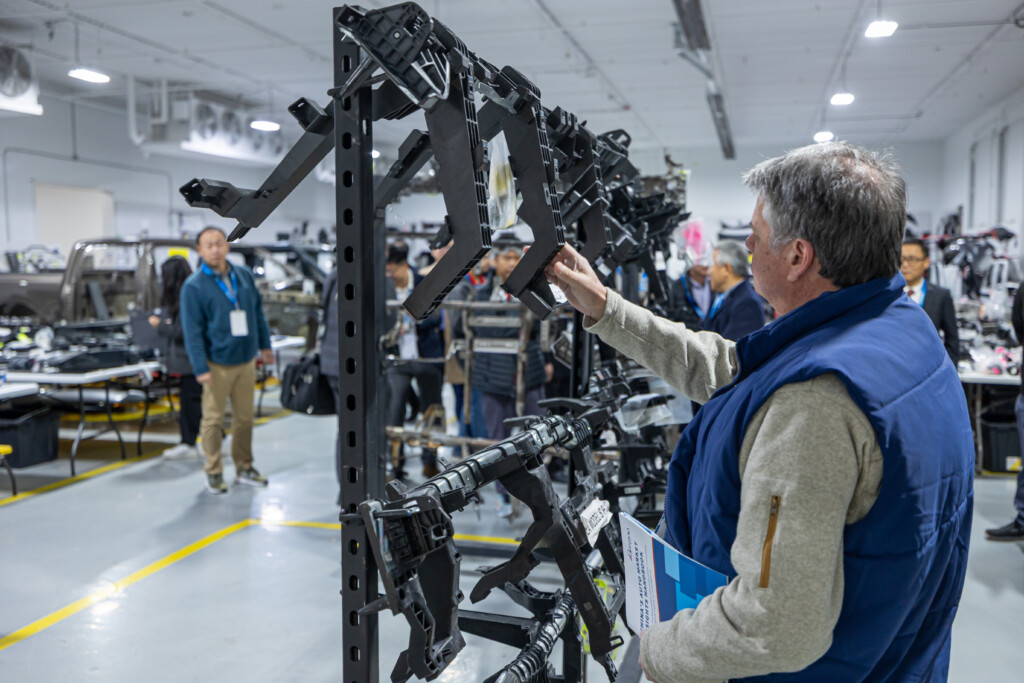
Track record matters. It validates the thesis that systematic, expert-led benchmarking, applied with discipline, consistently discovers savings that conventional program processes leave uncaptured. Every one of those programs also generates structured insight, where savings concentrate, how design changes interact with manufacturing constraints, and what the competitive benchmark looks like across different segments and markets.
Eureka is built on that knowledge. The ideas in its database have been proven on real programs and quantified against actual production architectures. It is not a general-purpose AI tool trained on public data.
Eureka’s most significant recent capability, BOM AI, addresses the bottleneck directly. A skilled cost engineer working manually through a vehicle bill of materials — cross-referencing teardown observations, quantifying gaps against competitive benchmarks — takes months per program. With hundreds of programs running simultaneously across the global OEM base, this isn’t viable. BOM AI runs that analysis in hours, not months, classifying every element of an uploaded BOM, cross-referencing against Eureka’s knowledge base, and delivering a structured gap analysis showing where the current design sits relative to best-in-class alternatives.
“AI did not create the intelligence,” Ambadipudi explains. “It removed the bottleneck between the intelligence existing and the engineer being able to use it within the window of the program where it can still change the outcome.”
The shift that actually matters
The fundamental change Ambadipudi describes is not technological. It is organizational. The industry needs to move from treating cost reduction as a corrective activity after a vehicle has been designed to treating it as a design input available before architecture decisions are made.
When cost intelligence functions as an input rather than a correction, programs move faster as fewer decisions need to be revisited. Cost targets are set against competitive reality rather than internal history. And the savings that have historically been identified too late to capture become available at the moment they are easiest and cheapest to act on.
The $1.3 trillion in materials spend will not be optimized by incremental improvements to existing processes. The scale of the opportunity and the pace of competitive change require intelligence that is continuous, early, and scalable across engineering organizations. The technology to support that shift exists. The question is whether the industry moves quickly enough to make it standard practice before margin pressure forces the issue.
Click here to read the full Automotive Industries interview with Richard Ambadipudi.
Related Insights


Thinking
Smarter, Faster, and Even Flying: The Future of Cars From CES 2025
The Consumer Electronics Show (CES) 2025 was nothing short...
Thinking
Turning Metrics into Strategies with Automotive Benchmarking
Today, metrics are everywhere. Yet, it’s not the abundance...
