CES 2026: Breakthrough Vehicle Tech and Mobility Innovations
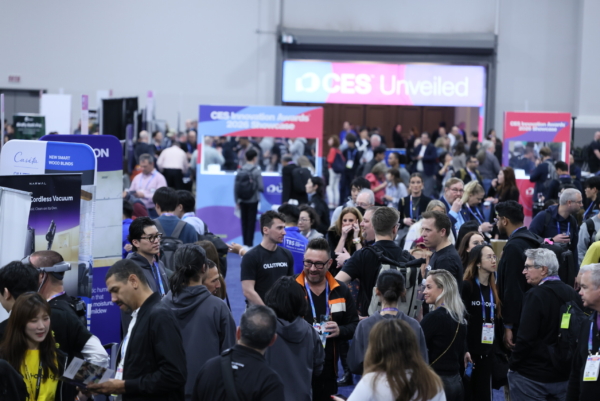
Consumer Electronics Show (CES) 2026 in Las Vegas proved that automotive and mobility technology now command center stage at the world’s premier tech expo. This year’s show floor was packed with electric vehicles (EVs), futuristic concept cars, autonomous platforms, and smart mobility solutions from global automakers, startups, and suppliers alike. From AI-driven in-car systems, to megawatt charging and self-driving robotaxis, CES 2026 showcased how cutting-edge tech is transforming both consumer vehicles and commercial transportation. Below, we dive into all the major vehicle tech and mobility product launches – spanning EVs, autonomous driving, charging infrastructure, in-car interfaces, and new mobility services – organized by category for clarity.
Next-Generation Consumer Vehicles (EVs & Concept Cars)
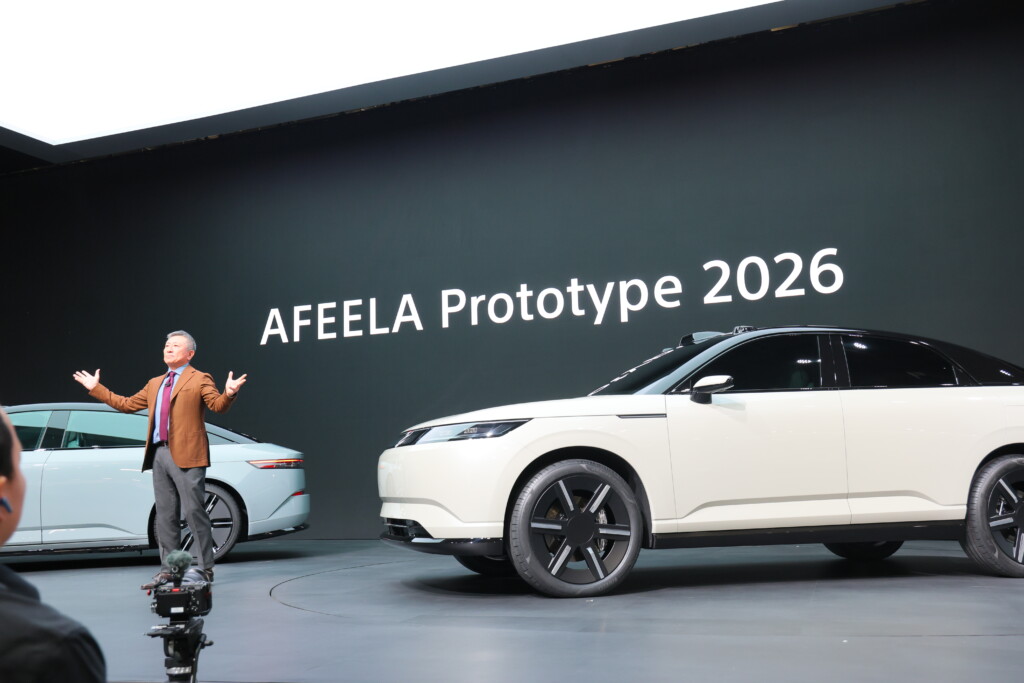
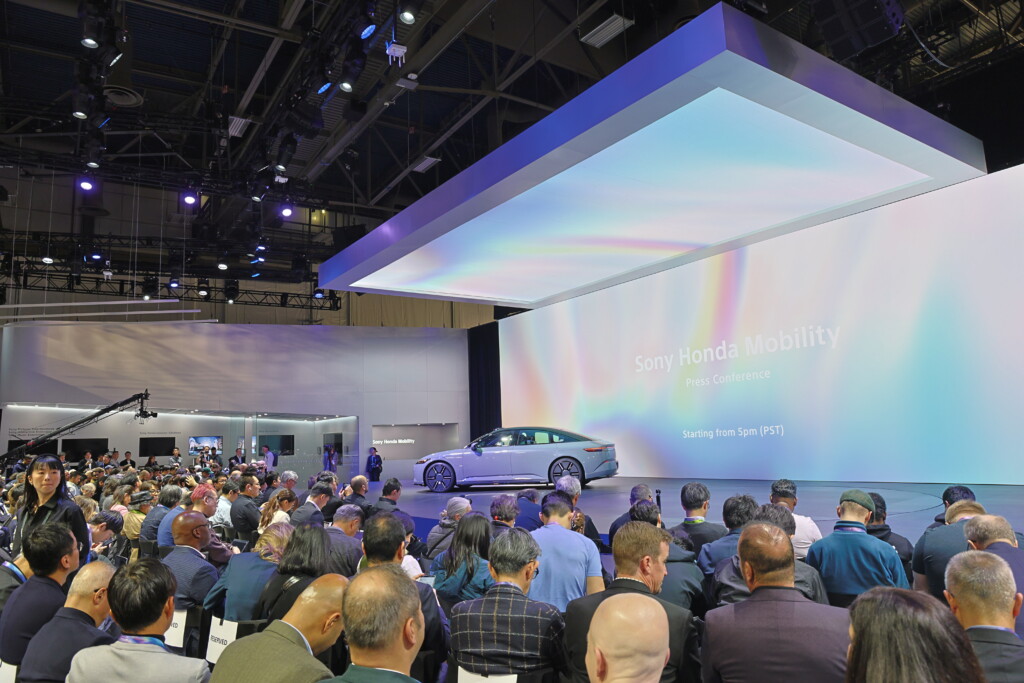
Major automakers and new entrants used CES 2026 to reveal their latest electric cars and daring concept vehicles. Sony Honda Mobility drew crowds with the AFEELA 1 – the jointly-developed electric sedan now nearing production. Afeela’s interior wowed with a massive dual-screen digital dashboard (12.3-inch plus 28.5-inch displays) stretching pillar-to-pillar, designed for immersive infotainment and even in-car gaming via PlayStation Remote Play. Building on last year’s announcements, Sony Honda also unveiled an AFEELA Prototype 2026 concept, highlighting greater interior space and accessibility while previewing features planned for a 2028 launch. In tandem, the company introduced the Afeela Personal Agent – an in-car conversational AI assistant leveraging Microsoft’s Azure OpenAI service to enable natural voice interactions and personalized dialogues with the vehicle. This “agentic AI” integration was emblematic of a broader CES trend to infuse vehicles with voice assistants and generative AI for a smarter, more connected cabin experience.
Germany: Mercedes-Benz & BMW
German luxury manufacturers also made headlines. Mercedes-Benz used CES to debut the all-new electric GLC SUV, marking the first U.S. showcase of this EV model. The electric GLC packs dual motors with 483 hp and boasts a range up to 713 km (WLTP) from an advanced battery and 800V architecture for ultra-fast charging. It’s equipped with the AI-powered MB.OS operating system and an available 39-inch “Hyperscreen” spanning the dashboard. Mercedes confirmed the GLC’s infotainment uses integrated Microsoft and Google AI for smarter voice commands and personalization. The SUV also introduces MB.Drive – a Level 2+ driver-assist system for city driving that uses NVIDIA’s full-stack autonomous driving platform for perception and control. In fact, Mercedes announced that its upcoming next-gen CLA EV will run NVIDIA DRIVE software for AI-based automated driving, underscoring the deepening partnership between the automaker and NVIDIA. Not to be outdone, BMW showcased its Neue Klasse iX3, a next-gen electric SUV. The BMW iX3 is notable as the first production car with Amazon’s Alexa+ built-in – an AI voice assistant enabling natural-language control of vehicle functions. BMW demonstrated how drivers can converse with the Alexa-based assistant (enhanced by a cloud-based large language model) to get information or adjust settings hands-free. The iX3’s AI assistant will roll out in markets later in 2026. BMW also touted improvements in its eDrive EV powertrain and charging software, claiming significantly reduced charging times. The iX3 supports both 800V and 400V DC fast-charging, making it compatible with a wide range of high-speed chargers.
Startups
Several startups and lesser-known manufacturers grabbed attention with unique EV concepts. U.K.-based startup Longbow displayed its Longbow Speedster – a lightweight aluminium electric sports car making about 300 hp. Thanks to a low-slung H-shaped battery and just ~900 kg curb weight, the Speedster can sprint 0–60 mph in ~3.5 seconds. Longbow plans limited European production of 150 units at ~$115,000 each, with a follow-on Roadster (with roof/windshield) designed to meet U.S. safety standards by 2030. Across the show, Chinese automakers also made their presence felt. Sony Honda’s AFEELA aside, Geely Auto spotlighted its new Full-Domain AI 2.0 vehicle architecture – a centralized computing platform using a “central intelligence engine” to coordinate all driving and in-cabin functions. Geely’s system underpins its Afari Smart Driving suite, which leverages high-performance sensors, AI, and big data for advanced autonomous driving features. Meanwhile, a rising Chinese EV brand (part of the “Starry Sky” project) drew curiosity with its Nebula Next 01 concept, and Great Wall Motors’ subsidiary showcased an H8-powered cruiser motorcycle – highlighting that CES had everything from cars to two-wheelers and even flying vehicles. Indeed, the show’s eclectic mix included electric motorcycles like Korea’s retro-styled Compass Rose Ciulator and even a prototype electric ground-effect seaplane (the Navee WaveFly 5X) capable of skimming above water at 40–50 mph.
Summary
In summary, CES 2026 affirmed that EV innovation is a truly global endeavor. From luxury SUVs loaded with AI software to indie electric roadsters and experimental prototypes, consumer vehicles are becoming smarter, more connected, and increasingly electric. Major launches by Mercedes, BMW, Sony-Honda, and others show that software-defined EVs with intelligent assistants and cutting-edge interfaces are arriving in the very near term.
Commercial & Industrial Mobility Tech (Trucking, Logistics & More)
Innovations weren’t limited to consumer cars – CES 2026 also showcased significant advances in commercial vehicles, industrial machinery, and logistics mobility solutions. In freight transport, the push toward autonomous, electrified trucking was evident. A major announcement came from Bosch and Kodiak Robotics, who revealed a partnership to develop Level 4 driverless semi-trucks. Bosch is supplying a suite of sensors and redundant components to integrate with Kodiak’s Class 8 autonomous platform, creating a production-ready self-driving truck system. This collaboration coincides with Kodiak preparing to deliver its first batch of autonomous trucks to a commercial customer (Atlas Energy Solutions in Texas) – an indication that driverless heavy-duty trucks are moving from prototype to real-world deployment. In a similar vein, Hyundai’s Motional joint venture demonstrated a fully autonomous IONIQ 5 Robotaxi navigating complex urban streets at Level 4 (no human driver). Interestingly, Hyundai even unveiled a separate “Parking Robot” machine to maneuver AVs into tight spots, underscoring the challenges of managing autonomous vehicle fleets when it comes to staging and parking. The message: solving autonomous driving is one step, but orchestrating how and where these vehicles dwell (and charge) is another frontier for smart mobility infrastructure.
Agriculture & Machinery
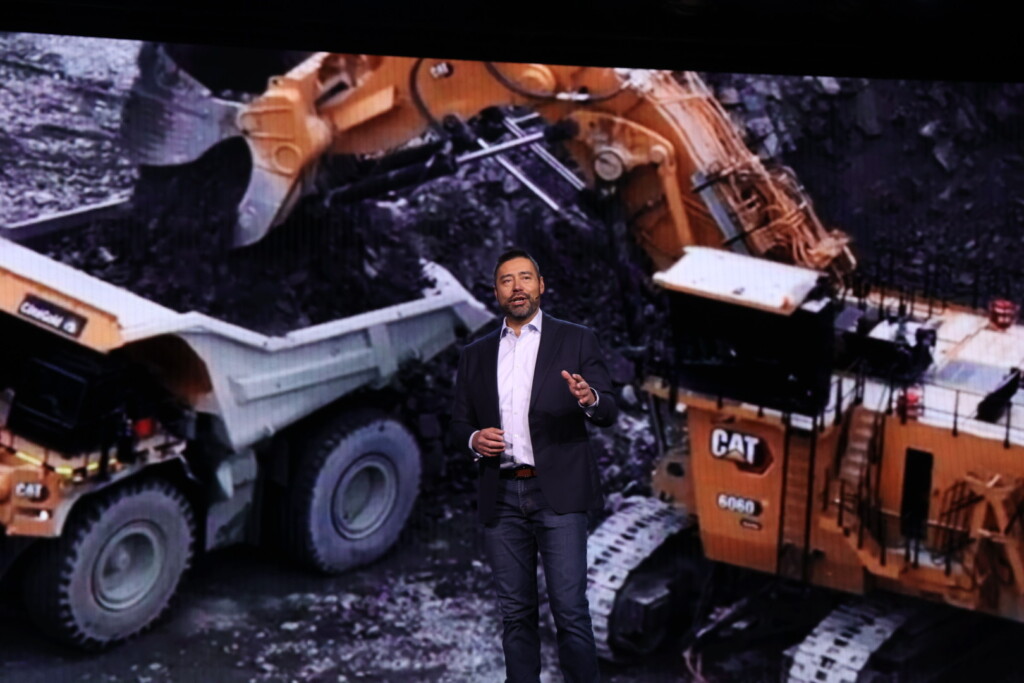
Beyond road vehicles, heavy equipment and agricultural machinery also featured high-tech upgrades at CES. Industry giant John Deere showcased its XP9 1100 combine harvester, the company’s largest, most advanced grain harvester. While not fully autonomous, the XP9 uses an array of cameras, sensors, and GPS-guided automation to maximize harvesting efficiency. Farmers at the booth claimed the combine’s dual-rotor threshing system, huge grain tank, and AI-driven optimizations can increase productivity by up to 30%, saving days of work during harvest season. (Notably, Deere had previously shown a fully autonomous tractor at CES 2022, and this year’s focus on a semi-automated combine highlights how incremental automation is improving even the most traditional farming tasks.) In the construction sector, Caterpillar appeared in a keynote to illustrate “Physical AI” in action – showcasing a smart excavator running on NVIDIA’s Jetson Thor AI platform to autonomously perform heavy digging tasks. Caterpillar emphasized how embedding AI at the edge (directly on vehicles like excavators, trucks, etc.) allows machinery to perceive and act intelligently on job sites, heralding a future of automation in construction and mining.
Logistics
Logistics and last-mile delivery tech also had their moments. Amazon’s Zoox – the autonomous shuttle-like robotaxi – was giving demo rides around Las Vegas during CES. The Zoox robotaxis, which carry passengers with no human driver, have been operating in limited Las Vegas service since late 2025, and plans are underway to expand to San Francisco, Austin, and Miami next. (A viral video even caught a Zoox getting briefly perplexed in an intersection during CES, highlighting the ongoing real-world challenges for AVs.) On the show floor, attendees could spot unusual mobility gadgets like rideable smart suitcases (yes, motorized luggage you can sit on to zip through airports) and new electric bikes and scooters. For example, Segway introduced its Myon eBike with electronic push-button shifting and built-in gyroscopes for smoother pedal-assist – blending micromobility with IoT features like GPS tracking and optional blind-spot radar for cyclist safety. Even the humble trailer got a high-tech upgrade: supplier Aumovio (Continental’s automotive arm) showed off smart Trailer Assist features for towing, including a Trailer Collision Assist that uses 360° cameras to warn if your trailer is about to hit an obstacle during turns. They also demoed a remarkable “Trailer Backtrack” function – essentially an “undo” button for backing up with a trailer. If a driver gets into a tight spot, Backtrack will automatically reverse the truck and trailer along its previous path to get out of a dead-end without jackknifing. These practical assists could be a boon for trucking and RV enthusiasts alike.
Summary
From warehouses to farms, and from highways to parking lots, CES 2026 showed that mobility tech is transforming every corner of commercial and industrial transportation. Autonomous driving software is being paired with rugged sensors to tackle trucking and logistics, while industries like agriculture and construction leverage AI for productivity gains. Even smaller-scale mobility – e-bikes, motorcycles, trailers – are becoming smarter and safer. The convergence of robotics, AI, and electrification is accelerating innovations not just for car owners but for the businesses and workers who keep our economy moving.
Autonomous Vehicle Platforms and Self-Driving Tech
Self-driving vehicle technology was ubiquitous at CES, as companies unveiled hardware and software to enable higher levels of vehicle autonomy. Robotaxi and autonomous shuttle platforms made headlines with new models and partnerships. Waymo (Alphabet’s AV division) introduced its next-generation autonomous vehicle for ride-hailing, dubbed “Waymo Ojai”. The Ojai is built on the Zeekr minivan EV from China’s Geely and comes outfitted with Waymo’s latest sensor suite – 13 cameras, 6 radars, and 4 LiDARs – most of which are mounted in an unmistakable roof dome. With a roomy, rider-friendly interior, these vehicles are poised to join Waymo’s fleet in San Francisco in the coming months. Meanwhile, Uber announced a major robotaxi collaboration: it’s teaming up with electric automaker Lucid Motors and autonomous tech startup Nuro to deploy a fleet of Lucid Gravity SUV robotaxis. Unveiled as prototypes at CES, the sleek black Lucid SUVs have been retrofitted with Nuro’s Level 4 self-driving system (sensors and Nvidia-powered compute) while maintaining a luxurious cabin for passengers. Uber plans to begin autonomous ride-hail service with these vehicles in the San Francisco Bay Area later in 2026 (pending regulatory approval). This partnership underscores how ride-hailing companies are re-entering the robotaxi race by leveraging partnerships: Uber brings the service platform, Lucid provides high-end EVs, and Nuro supplies the autonomy stack. Notably, Hyundai/Motional’s Ioniq 5 robotaxis and Amazon Zoox shuttles also reinforced that multiple players are close to operationalizing driverless ride services in select cities.
Autonomy Hardware
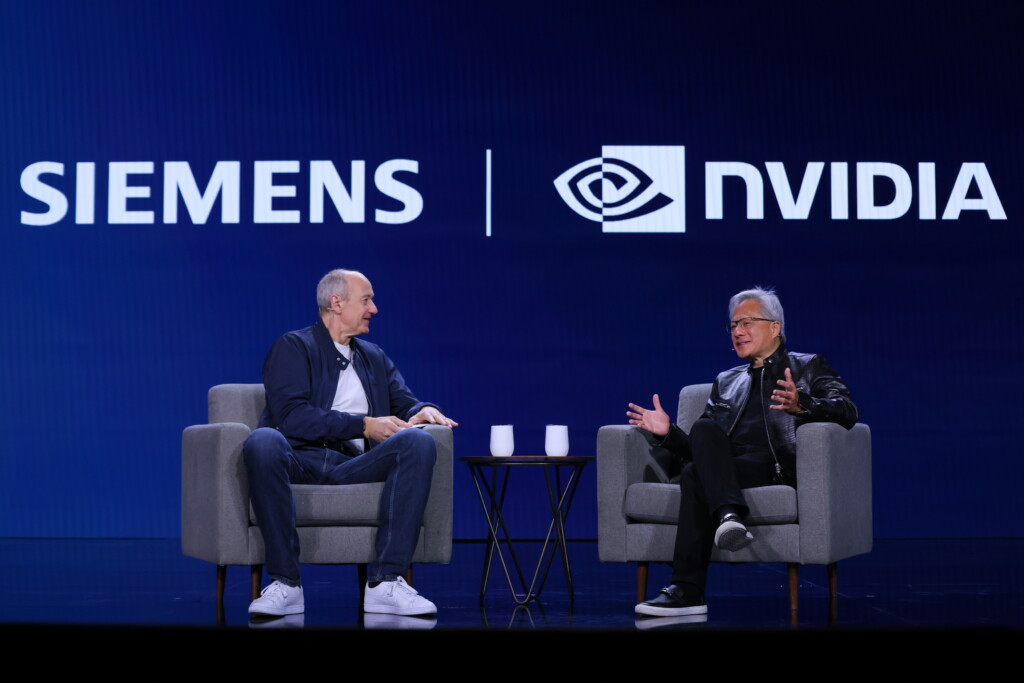
On the hardware side for autonomy, several chipmakers and suppliers used CES to roll out new compute platforms aimed at powering self-driving AI. NVIDIA highlighted its end-to-end automotive toolkit – announcing the Alpamayo family of open-source pre-trained AI models to accelerate AV development, and expansion of its Drive Hyperion sensor + compute reference platform to support more automakers advancing to Level 4 autonomy. NVIDIA’s tech is already inside many concept cars at the show – from Mercedes’ new CLA and GLC (running NVIDIA’s Drive software) to the aforementioned Lucid/Nuro robotaxis. Rival Qualcomm also made waves, confirming a partnership with Tier-1 supplier ZF to deliver scalable Snapdragon Ride ADAS solutions. Qualcomm announced that Chinese EV maker Leapmotor will use the Snapdragon Elite automotive platform in its upcoming D19 model, integrating cockpit, ADAS, body control and connectivity into one system-on-chip. Furthermore, Qualcomm and Google are expanding their collaboration on software-defined vehicles to leverage in-car “agentic AI” – hinting at future Android-based car systems with built-in AI assistants and autonomous features. Another player, Renesas Electronics, debuted what it called the industry’s first 3nm automotive SoC: the new R-Car Gen 5 family (X5H), designed for software-defined vehicles. At CES, Renesas partnered with StradVision to demo camera-based perception running on the R-Car X5H, showing how the chip’s multi-domain compute (for ADAS, infotainment, and gateway functions) can handle real-time front-view object detection for ADAS with ease. This 5th-gen R-Car platform emphasizes openness and high performance per watt, aiming to give automakers another option alongside the Nvidia and Qualcomm solutions.
Technology
Autonomous sensing technology also saw advancements. Leading automotive supplier Valeo showcased a suite of advanced in-cabin monitoring applications developed with Australian firm Seeing Machines. One highlight was Valeo’s Panovision head-up display that uses Seeing Machines’ eye-tracking software to implement an adaptive warning system. Essentially, alerts are prioritized and positioned based on where the driver is looking. The collaboration expands traditional driver-monitoring (which typically checks drowsiness or distraction) into a more holistic Interior Cabin Monitoring System (ICMS) that can track occupant gaze, detect if a driver is wearing a helmet or mask, and create a 3D map of the cabin for enhanced safety. This kind of tech will support semi-autonomous features (ensuring drivers are attentive when needed) and improve smart airbag or restraint deployment by knowing occupant positions. On the exterior sensing front, companies are pushing performance too. For instance, Gentex unveiled a next-gen Full-Display Mirror tied to an 8K rear camera. Its clever software can dynamically widen the field of view at low speeds or when a car is in the blind spot, and even integrate multiple camera feeds (rear, bed, front) into the digital mirror for comprehensive situational awareness. This mirror is production-ready, showcasing how high-res sensors and displays will replace traditional mirrors to eliminate blind spots.
Summary
All told, CES 2026 made clear that autonomous vehicle tech is accelerating through partnerships and powerful new silicon. Robotaxis from Waymo, Uber/Lucid, Hyundai, and Zoox indicate multiple real-world deployments in 2026. Under the hood, the battle of the onboard supercomputer is on – NVIDIA, Qualcomm, and Renesas all offering AI brains to enable Level 3/4 capabilities. And from inside-out monitoring of drivers to outside-in perception of the world, the sensor and software ecosystem is maturing to make self-driving and driver-assist systems more robust and safer than ever.
EV Charging Infrastructure Innovations
A critical piece of the mobility puzzle – electric vehicle charging infrastructure – also saw significant innovation at CES 2026. As EV adoption grows, companies are addressing how to charge those EVs faster, smarter, and more conveniently. Autel Energy, for example, used the show to launch its new Avant line of EV charging solutions aimed at fleet operators and smart facilities. The Autel Avant chargers (encompassing both AC and high-power DC units) emphasize automation: they support touch-free automated plug-in capabilities, so an autonomous or human-driven EV can simply park and have the charger robotically connect without manual intervention. The Avant system also includes built-in self-diagnostics and predictive maintenance for high uptime, and crucially supports open standards like OCPP and ISO 15118 (Plug&Charge) to integrate with any backend software. Autel’s philosophy is that charging infrastructure should be hardware-agnostic and interoperable, not locked into proprietary ecosystems – an approach it says will ease scaling for fleet depots and public networks.
Robotics
Along similar lines, other suppliers highlighted robotic charging solutions. Autovoltek demonstrated its nifty ChargeRobot, a wheeled charging bot for home garages that autonomously finds the car’s port and plugs in the cable. The current ChargeRobot model works with Tesla vehicles (using computer vision to align with the port) and has been on sale for about two years, priced around $1,850. Autovoltek plans support for other EV protocols as well. The idea of a “Roomba for EV charging” resonated as a way to make home charging completely effortless – you never forget to plug in, the robot handles it for you.
Ultra-fast Charging Speed
Charging speed and capacity are also reaching new heights. On the CES floor, one exhibit featured a Megawatt Charging System (MCS) for heavy-duty EVs, capable of up to 3.75 MW power delivery. This ultra-fast charger, developed by a consortium and demonstrated by companies like CHAEVI, is designed for electric trucks and buses – it can top up a large commercial EV in well under an hour using a thick automated connector. While not yet common, the MCS standard was recently finalized and its appearance at CES signals the ecosystem gearing up for electrified trucking. Even for passenger cars, fast charging is improving: many new EVs (such as the Mercedes GLC, BMW iX3, etc.) support 800-volt architecture, enabling high power DC charging that can add hundreds of miles of range in minutes when paired with 350 kW chargers.
Battery Improvements
Battery technology breakthroughs were also on display, since better batteries go hand-in-hand with charging advancements. A notable claim came from Finland’s Donut Lab, which unveiled a solid-state battery that it says is already in small-scale production. The Donut solid-state cell reportedly achieves 350–400 Wh/kg energy density and can charge 0–100% in five minutes, with an extraordinary lifetime of 100,000 cycles. If true, this would be game-changing: Donut Lab even noted its batteries are being deployed in real vehicles, including Verge Motorcycles’ new TS Proelectric superbike. In fact, the Verge TS Pro claims to be the first vehicle using a production solid-state battery – available with up to a 33.3 kWh pack yielding ~370 miles range, while cutting weight and improving safety. Solid-state technology was a hot topic at CES, with other companies like Taiwan’s ProLogium also showcasing their latest solid-state cells. ProLogium announced a partnership with Darfon to integrate its 4th-gen solid-state batteries into e-bikes and light EVs, aiming to bring the safety and energy benefits of solid-state to smaller mobility devices first.
Smart Integration in EV Charging
Finally, CES underscored that charging is becoming smarter and more integrated into the overall mobility ecosystem. There was talk of vehicle-to-grid (V2G) and even vehicle-to-cloud concepts. For instance, French supplier Valeo presented a visionary “Compute-to-Cloud” scheme where parked EVs could rent out their onboard CPUs/GPUs to perform cloud computing tasks (like AI training or hosting games) as a way for owners to earn money while plugged in. While a bit out-there, it parallels V2G in treating the idle car as an asset – be it for energy or computing. On a more practical note, LG Energy Solution’s award-winning Better.Re battery management system demonstrated how AI can learn a driver’s charging and usage patterns to optimize battery longevity and charging times. And companies like Flash and HERE showed how navigation systems are integrating charging stops intelligently – using real-time data to suggest where to charge on a route, with availability info and even reservations, so that EV drivers get a seamless experience planning long trips. The bottom line: CES 2026 proved that keeping EVs powered will soon be as high-tech as the vehicles themselves, with ultra-fast chargers, automated “plugging-in”, smarter energy management, and new battery tech all converging to make charging faster, easier, and more efficient.
In-Car Technology and Digital Cockpits (ADAS, Infotainment & UX)
Inside the vehicles, CES 2026 showcased a leap forward in cockpit technology, user interfaces, and advanced driver-assistance systems (ADAS). The trend is clear: cars are becoming sophisticated “computers on wheels” with rich displays, voice-controlled AI, and sensors that monitor every aspect of the cabin and road. One of the show’s stars was the Sony-Honda Afeela’s cockpit, featuring that expansive dual display dashboard mentioned earlier – effectively creating a panoramic digital cockpit for both driver and passenger. This ties into a broader industry move toward software-defined dashboards: expect configurable digital instrument clusters, heads-up displays, and entertainment screens that span entire interior surfaces. For example, LG unveiled a Mobility Display Solution that can turn a vehicle’s windshield into an intelligent AR display, overlaying navigation and safety alerts in the driver’s line of sight. LG’s system can contextually highlight objects or hazards via Vision AI, and also personalize content for passengers on other screens with real-time translation or entertainment recommendations.
Automotive Voice & AI Innovations
Voice and AI were perhaps the biggest story in in-car tech at CES. We saw a strong push to make voice the primary interface for drivers to interact with their cars. BMW’s integration of Alexa+ is a prime example – the generative AI voice assistant allows drivers to ask complex, conversational questions and issue natural-language commands, blurring the line between a smart speaker and the car’s native assistant. Early demos showed tasks like planning multi-stop trips or adjusting cabin settings through casual speech, rather than rigid voice menu commands. Likewise, Cerence (a leading automotive voice AI supplier) showcased its next-gen “Agentic AI” voice platform, xUI, which impressed observers with its fluid, human-like responses. Chinese automaker Geely announced it will integrate Cerence’s new AI voice assistant into future models – a demo at CES showed the system controlling navigation, climate, and even interacting with Microsoft 365 for productivity, all in a very natural dialog with the user. The Cerence xUI could even handle colloquial, off-script conversation without failing, pointing to a near future where talking to your car is as easy as talking to a person. The “voice shortcut” feature also lets drivers set up custom phrases to trigger multi-step actions (e.g. saying a single phrase to open all windows and start playing a playlist). Taken together, the advent of generative AI voice assistants in cars – from Alexa to Cerence – promises a safer, hands-free way to operate the increasingly complex features in modern vehicles.
User Safety Improvements
Another area of in-car tech that shone at CES is driver monitoring and occupant safety. As vehicles gain semi-autonomous features, ensuring the driver remains alert and the occupants are safe is critical. TrinamiX (a Bosch subsidiary) unveiled an innovative in-car biometrics system using near-infrared spectroscopy via a fingerprint sensor. Built into a start button or steering wheel, it can instantly analyze the driver’s skin for alcohol levels – a potential way to implement DUI prevention by disabling driving if alcohol is detected above limits. In demos, TrinamiX claimed results within seconds; they are working to speed this up further. The same company also showed infrared camera-based occupant monitoring that does more than just see people – it uses a dot projector (like in FaceID) to detect if occupants are live humans (not realistic dummies), identify individuals, and even measure heart and respiration ratespassively. This could enable health and comfort features or ensure a toddler isn’t left behind in a car. Valeo and Seeing Machines’ aforementioned gaze tracking HUD also fits here – by knowing where a driver is looking, the car can decide when and how to warn the driver of hazards more intelligently. These kinds of interior sensing technologies are quickly becoming standard, with regulations on the horizon requiring distracted driving monitoring.
Infotainment Systems
On the infotainment and connectivity front, automakers showed off new partnerships for content and convenience. Mercedes demonstrated streaming Dolby Atmos music and even video from Xperi’s TiVo platform on its latest MBUX system. A noted feature in the new Mercs is native Spatial Audio with Dolby Atmos for an immersive sound experience through the cabin’s premium speakers. Additionally, over-the-air (OTA) updates were heavily emphasized – Mercedes’ MB.OS and others are fully updatable, meaning features like MB.Drive ADAS can receive capability upgrades (e.g. improved city autonomy or new parking features) via software downloads. This software-defined approach means cars can improve over time, much like smartphones. Qualcomm and Google’s collaboration hints at deeper integration of Android-based services – for instance, HERE and TomTom announced integration of Alexa Custom Assistant into their navigation apps, enabling voice-interactive route planning and even voice-activated parking and charging searches as part of the driving experience.
Garmin’s Meta Band
Finally, some wild but intriguing user interface concepts appeared, true to CES form. Garmin demoed a prototype In-Cabin Neural Band (developed with Meta) – a wearable wristband that reads your neural signals to detect finger movements, allowing you to control a touchscreen with mid-air gestures. In essence, flicking your thumb and fingers in the air generates “swipe” and “click” signals to the infotainment system, so passengers (or drivers when parked) can interact with screens without touching them. It’s an exploratory concept, but it spurred conversation on new ways for occupants to interface with vehicles in an autonomous future where conventional controls might be obsolete.
Summary
In summary, digital cockpits at CES 2026 were all about AI, awareness, and immersion. Cars are getting voices and ears – with advanced voice assistants and interior cameras – alongside ever-bigger eyes (sensors) and brains for ADAS. For drivers and passengers, this means more natural interaction (talking instead of tapping), more personalization (cars that know you and adapt), and enhanced safety (cars that monitor your wellbeing and attention). The car is truly becoming a smart device, and the gap between consumer tech and automotive tech has all but disappeared.
Smart Mobility Services and Connectivity (Ride-Sharing, V2X & Beyond)
CES 2026 underscored that vehicles do not exist in isolation – they are part of a larger mobility ecosystem connecting services, infrastructure, and data. Several announcements highlighted how smart mobility services and vehicle-to-everything (V2X) communication are evolving.
Robotaxis
A focal point was the emergence of robotaxi services and shared mobility platforms. As detailed earlier, companies like Uber are re-entering the autonomous ride-hailing space via partnerships (with Lucid and Nuro), aiming to operate fleets of driverless vehicles in cities. Waymo and Zoox likewise are expanding their robotaxi operations. These services generate enormous data and require integration with city infrastructure (for mapping, traffic info, etc.). That’s where V2X communication comes in. During CES, it was evident that C-V2X (Cellular Vehicle-to-Everything) tech is gaining momentum. For example, Qualcomm and partners discussed how 5G-enabled V2X modules can let cars communicate with traffic lights, pedestrians’ phones, and each other to improve safety and traffic flow. While not a flashy product launch, this underlying tech supports things like warning a driver (or autonomous system) of an unseen car about to run a red light, or coordinating platoons of trucks. Some demos showed smart intersection technology where vehicles broadcast their intentions and listen to others to negotiate merges more smoothly – a taste of smarter cities ahead.
Integration
On the mobility services front, integration was a key theme. HERE Technologies (the mapping company) showcased a platform that incorporates real-time charging availability and parking information into route planning. In practice, this means a navigation system could suggest, “There’s an open fast charger 2 miles ahead, would you like to stop for 10 minutes to top up?” complete with details like plug type, cost, and amenities nearby. This kind of service relies on connectivity between vehicles and infrastructure – an illustration of V2X in action, albeit via cloud data. Parking tech also got a surprising spotlight (as noted in Flash’s CES blog) – since autonomous fleets will need smart parking solutions, companies like Flash are pushing open, cloud-connected parking platforms that can reserve spots, orchestrate charging while parked, and even enable “automated valet” where a robot or the car itself parks in a dense garage guided by sensors. Hyundai’s parking robot is one approach; another is turning parking facilities into multi-purpose hubs that handle not just storing the car, but also charging it, running diagnostics, or dispatching it for the next ride – all with minimal human intervention.
Another dimension of smart mobility is multi-modal integration. CES saw announcements around connecting different forms of transport through digital platforms. For instance, a concept of “Mobility as a Service (MaaS)” apps was floated, where one could plan a trip combining e-scooters, autonomous shuttles, and trains all in one app, with single-payment and timing coordination. While no single product stole the show here, many startups in the smart mobility section were showing off software to enable exactly that – highlighting events, one startup demonstrated an AI-powered commute planner that factors weather, traffic, and even your calendar to recommend whether you should drive, rideshare, or take an e-bike on a given day.
Security
Also noteworthy was vehicle communications security – not a consumer-facing service, but critical for connected mobility. Companies demoed cybersecurity solutions to protect OTA updates and V2X messages from hacking, acknowledging that as cars become rolling network nodes, they must be secure. For instance, Bosch discussed its Vehicular Public Key Infrastructure (VPKI) for signing V2X transmissions, ensuring authenticity so that a fake signal can’t trigger wrong reactions in cars.
Ride-Sharing
In the realm of electrified shared mobility, ride-sharing and car subscription services showed incremental improvements. Some EV startups announced battery subscription or swap services – one example being a company that will let urban EV taxi drivers swap a modular battery at a station in 5 minutes instead of waiting to charge. While that was a prototype demonstration, it attracted interest as a potential way to keep ride-hail EVs in service longer each day.
The presence of global automakers and suppliers in these discussions indicates that traditional companies are now actively engaging with the likes of Uber, Lyft, and tech firms to shape the future of mobility services. Lucid’s CEO, for example, noted that partnering with Uber on robotaxis allows them to gather valuable usage data and tap into a ready market for autonomous fleets, rather than selling cars one by one. This reflects a broader strategic shift: automakers are exploring providing mobility-as-a-service themselves or through joint ventures, rather than just selling vehicles.
Innovation
Finally, smart city infrastructure tie-ins were evident. Smart traffic management systems that use AI to optimize light timing and reduce congestion were highlighted, often in the context of reducing emissions and accommodating autonomous vehicles. Some companies like Autel even presented a vision of an AI-powered “Future City” modelwhere an integrated system manages EV charging, energy storage, and traffic flow in concert. In this model, an office parking garage’s solar panels might charge a fleet of autonomous shuttle vans at midday, and those shuttles then provide last-mile rides to nearby transit hubs during rush hour, all coordinated by a central AI that learns demand patterns. It’s a futuristic scenario, but one that CES panels and exhibits hinted is closer than we think, thanks to the convergence of connected cars, smart grids, and IoT infrastructure.
Conclusion
In summary, CES 2026 painted a picture of mobility that is highly connected and service-oriented. Cars are becoming part of a broader network: talking to the cloud, to the city, and to each other. The rise of robotaxis, integration of voice assistants into navigation and parking, and V2X safety systems all point toward a future where getting from A to B involves a symphony of smart technologies working behind the scenes. Whether you’re riding in a shared autonomous EV or driving your own connected car, the ecosystem around you – from traffic lights to parking garages – will increasingly anticipate and respond to your journey, making mobility more seamless, efficient, and intelligent.
Disclaimer
This article is provided for general informational purposes only and does not constitute technical, legal, financial, or professional advice. While every effort has been made to ensure the accuracy and reliability of the information presented, the content is based on publicly available sources, internal research, and the authors’ analysis at the time of publication. Readers are encouraged to independently verify any information before relying on it for decision-making. Certain sections of this article have been edited or enhanced using artificial intelligence (AI) tools to improve clarity, structure, and readability. Select images are courtesy of Consumer Technology Association (CTA)®
