Guangzhou Auto Show 2025: What the World Learned from China’s Mobility Showcase
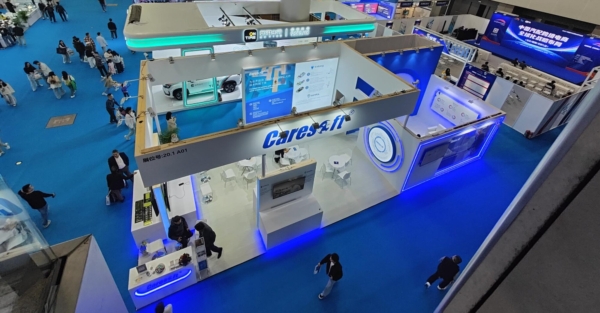
Walking through the halls of the Guangzhou Auto Show in 2025, it became immediately clear that this was not just another automotive exhibition. The atmosphere felt less like a traditional motor show and more like a live demonstration of where the global auto industry is heading. Guangzhou has always been a practical show rather than a concept driven spectacle like Shanghai, but this year it delivered something far more valuable. It showed how China is turning advanced mobility technologies into scalable, affordable, real-world products at unprecedented speed.
With more than one thousand vehicles on display and nearly sixty percent of them classified as new energy vehicles, the show confirmed that electrification is no longer a transition phase in China. It is the default state of the market. What stood out most was not just the number of electric vehicles, but the maturity of the technology, the depth of integration across software and hardware, and the relentless focus on cost efficiency without sacrificing features or performance.
Electrification Has Moved Beyond First Principles
The first major observation from Guangzhou was that the industry conversation has clearly moved beyond whether electrification works. That question is settled. The focus is now on how efficiently it can be executed, how quickly products can be refreshed, and how well software and energy systems can be integrated into everyday use cases.
Chinese manufacturers showcased a wide spectrum of battery electric vehicles, plug in hybrids, and extended range electric vehicles. Rather than treating these powertrains as competing philosophies, Chinese OEMs are deploying them as complementary solutions. Extended range systems drew enormous attention, offering total ranges exceeding one thousand kilometers while retaining meaningful pure electric driving capability. This approach directly addresses consumer anxiety around charging infrastructure without abandoning electrification goals.
What was equally striking was how short development cycles have become. Several OEMs openly referenced refresh cycles of twelve to eighteen months. This pace is reshaping expectations around vehicle lifecycles and places enormous pressure on global competitors who still operate on four-to-six-year product plans.
Software Defined Vehicles Are No Longer a Buzzword
Perhaps the most defining theme of Auto Guangzhou 2025 was the complete normalization of the software defined vehicle. Software was not presented as an add on or optional upgrade. It was the organizing principle around which vehicle architectures are now built.
Domain controllers, centralized computing platforms, and vehicle operating systems were featured across almost every major booth. Companies such as Huawei, Tencent, Baidu, and several OEM in house software teams demonstrated full stack ecosystems that combine infotainment, advanced driver assistance, energy management, and chassis control into unified platforms.
This shift was visible not only in premium vehicles but also in mainstream and even budget segments. Vehicles priced below eleven thousand dollars were shown with advanced navigation assisted driving, lidar sensors, and over the air update capability. Features that were once exclusive to luxury brands are now rapidly democratized.
The implication is profound. Competitive advantage is no longer defined by mechanical differentiation alone. It is increasingly determined by software ecosystems, data feedback loops, and the ability to iterate algorithms at scale.
ADAS Becomes a Commodity Rather Than a Luxury
One of the most eye-opening observations at the show was how advanced driver assistance systems have cascaded down the price ladder. Level two and level two plus functionality is now nearly standard in the mid-market segment, with penetration rates approaching seventy percent in new energy vehicles.
Budget vehicles demonstrated lidar based navigation on autopilot stacks that would have been unthinkable at this price point just a few years ago. At the premium end, the focus has shifted from simply adding more sensors to improving system reliability, redundancy, and real-world performance in complex urban environments.
Another notable trend was the increasing adoption of full system solutions from technology partners. Several OEMs have chosen to integrate complete ADAS stacks from Huawei rather than developing brand specific solutions. This reflects a pragmatic approach focused on speed to market and cost control rather than proprietary differentiation.
Battery Technology Moves from Chemistry to Systems Engineering
Battery innovation at Guangzhou extended far beyond headline chemistry announcements. While sodium ion batteries and semi solid-state technologies were present, the more important story was systems level engineering.
Manufacturers highlighted extreme safety demonstrations, including batteries operating under water, surviving gunshot and puncture tests, and withstanding temperatures exceeding fourteen hundred degrees Celsius. These were not lab concepts but production ready systems.
Equally important was the focus on manufacturing quality. CATL presented a battery production process with over seven thousand quality checkpoints, achieving defect rates measured in parts per billion. This level of consistency changes the reliability equation for electric vehicles and supports mass market adoption.
Fast charging also took a major leap forward. Lithium iron phosphate batteries capable of adding hundreds of kilometers of range in ten minutes were presented as mass produced products rather than future promises. Combined with eight-layer safety architectures and extreme durability testing, this signals a shift from incremental improvement to industrial scale deployment.
China’s Cost Advantage Is Structural, Not Temporary
A recurring theme throughout the exhibition was cost competitiveness. Chinese OEMs benefit from a vertically integrated supply chain that spans raw materials, cell manufacturing, power electronics, and recycling. This integration delivers a cost advantage estimated at twenty to thirty percent compared to many global competitors.
What makes this advantage particularly durable is the degree of localization. From silicon carbide wafers to ADAS chips, China is actively reducing dependence on foreign suppliers. Domestic alternatives now exist across nearly every critical component category, including sensors, memory, controllers, and power semiconductors.
This strategy is not only about geopolitics. It also enables faster iteration, tighter integration, and better cost control. The result is vehicles that deliver more technology at lower prices and at greater scale.
Chassis, Motors, and Integration Take Center Stage
Beyond batteries and software, Guangzhou revealed major progress in vehicle integration. Multi in one electric drive units, some combining up to eleven functions, are becoming common. These systems reduce weight, improve efficiency, and simplify packaging while delivering high torque and power output.
Advanced chassis systems were also a major highlight. Digital chassis platforms capable of predictive control, real time posture adjustment, and coordinated braking, steering, and suspension responses were demonstrated across multiple brands. These systems improve comfort and safety while enabling features such as crab walk, autonomous drifting, and extreme stability during tire blowouts.
Material innovation played a key role as well. High strength steels, aluminum alloys, hydroformed frames, and large-scale die casting were used to balance lightweight design with exceptional crash performance. Several vehicles showcased structures using submarine grade steel and composite reinforcement techniques to achieve both rigidity and safety.
Interiors Become Intelligent Living Spaces
Inside the vehicles, the transformation was just as striking. Multi-screen cockpits, large augmented reality head up displays, and AI powered voice assistants are now standard expectations rather than novelties.
Manufacturers focused heavily on comfort engineering. Seat structures with layered foam systems, vibration damping, and ergonomic contouring were presented as critical differentiators. Noise reduction, air quality management, and personalized ambient environments were treated with the same seriousness as powertrain performance.
Connectivity extended beyond the vehicle itself. Cross device integration, vehicle to infrastructure communication, and cloud-based personalization are becoming integral to the ownership experience. Vehicles are increasingly positioned as mobile digital spaces rather than transport appliances.
Extended Range and Hybrid Systems Gain Strategic Importance
While battery electric vehicles dominated the show numerically, extended range and hybrid systems played a strategic role. These architectures provide flexibility for consumers and allow manufacturers to address diverse regional infrastructure conditions.
Range extender systems demonstrated industry leading efficiency, low noise operation, and AI driven energy management. Some systems could maintain full performance even with depleted batteries, effectively blending the best attributes of electric and combustion technologies.
This pragmatic approach reflects a market that values usability and reliability alongside sustainability. It also provides Chinese OEMs with a competitive edge in export markets where charging infrastructure may still be uneven.
Concept Cars Point to a Bold, Integrated Future
The concept vehicles at Guangzhou were less about radical styling and more about systems integration. Flying car concepts, by wire chassis architectures, and ultra-low drag designs were presented alongside credible production pathways.
Several concepts demonstrated 1000v architectures, axial flux motors, and extreme aerodynamic efficiency. These vehicles serve as testbeds for technologies that are likely to appear in production much sooner than global audiences might expect.
A Clear Message to the Global Industry
The combination of fast development cycles, vertically integrated supply chains, software centric architectures, and aggressive cost targets creates a competitive landscape that is difficult to match. Global OEMs can no longer rely on brand heritage or incremental innovation to maintain leadership.
Guangzhou did not present a speculative future. It presented a working present. Vehicles on display were production ready, affordable, and packed with technology that redefines value expectations.
For anyone seeking to understand where mobility is truly heading, Guangzhou offered one of the clearest windows yet. The future of the automobile is connected, electrified, software driven, and increasingly shaped by China’s ability to industrialize innovation at scale.
Disclaimer:
The content provided on this blog is for informational purposes only and should not be construed as professional advice. While we strive to ensure the accuracy of the information presented, Caresoft Global makes no warranties, either express or implied, about the completeness, reliability, or accuracy of the content on this blog. Some information may be outdated, obsolete, or inaccurate, and we strongly recommend that you independently verify any information before relying on it. Any action you take based on the information provided on this blog is strictly at your own risk. Caresoft Global will not be liable for any losses or damages in connection with the use of our blog. Links to third-party websites are provided for convenience and informational purposes only; they do not constitute an endorsement or approval by Caresoft Global of any products, services, or opinions of the corporation, organization, or individual.
Related Insights

Event
IAA MOBILITY 2025
September 8-12, 2025
Munich, Germany


Event
Join us at CES 2026
January 6-9, 2026
Las Vegas, NV
